
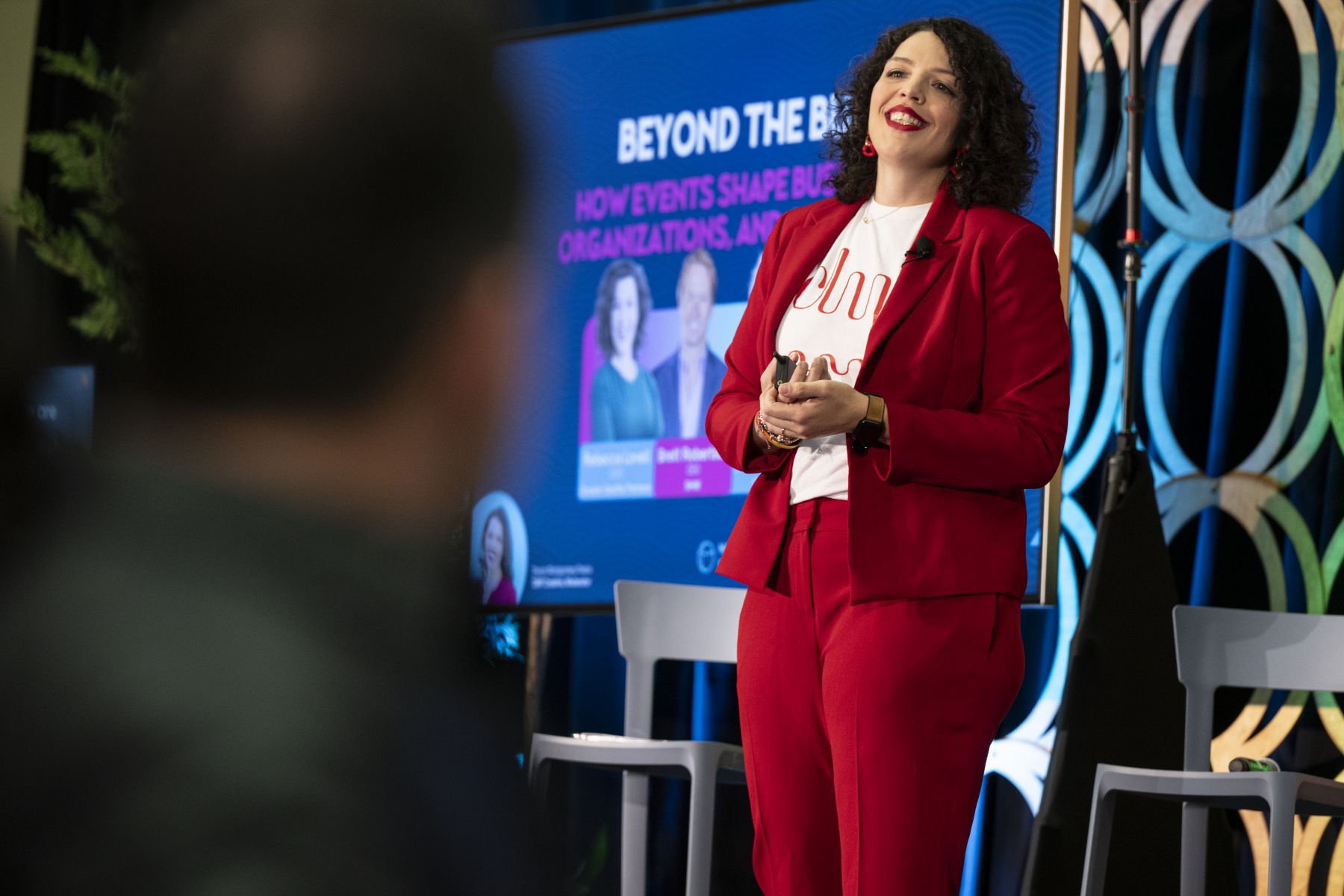
When a CEO takes the mic, they mean well. But the moment they read from a script, they stop leading and the room feels it. Here’s what’s at stake.
Someone on your team had a great idea.
"The CEO should open the annual meeting. It'll feel authentic. It'll set the tone."
And they're right. It should.
Here's what tends to happen instead.
An admin drafts a script. The CEO reviews it between meetings. They read through it once the night before, feel reasonably prepared, and walk on stage the next morning in front of 300 of their own people and deliver a version of themselves that nobody in that room quite recognizes.
The words are fine. The slides are polished. But something is off, and the room can feel it even if they can't name it.
I see this regularly. And it's worth talking about honestly.
The thing that actually gets spent in that moment
A CEO's presence is one of the most valuable assets in any corporate room. Their authority, their conviction, their ability to make people feel like the direction is clear, that's what people came for.
When a leader is tracking where they are on a script, managing the segue to the next speaker, and making sure the slides are advancing on time, that presence gets redirected. They're doing logistics when their people need them to be leading.
This is not a criticism of executives. Most leaders I work with are exceptional communicators in the right context. A board meeting, a client conversation, a one-on-one, they're sharp and grounded. Emceeing is just a different skill set. It requires a specific kind of attention that competes with the attention it takes to actually run a company. Trying to do both in the same hour usually costs you both.
The message lands flat. The energy doesn't transfer. And by the afternoon break, people are back on their phones.
What holding the room actually looks like
When I step into a program, my job is to make sure the room works so that everyone else can do their job.
That means managing pacing and energy across the full day, not just the opening remarks. It means connecting ideas across speakers so the program feels cohesive. It means reading the room in real time and adjusting without the audience noticing. And it means your CEO gets to walk out, speak from a place of genuine presence, and walk off without having managed a single logistical detail.
Leaders lead. Speakers speak. The audience actually receives it.
That shift is more significant than it sounds. A room that feels guided is a room that stays engaged. And a room that stays engaged is one where the actual goals of the day have a real chance of being met.
Where this shows up in the budget conversation
Most organizations I talk to have invested real money in their events. Venue, production, catering, AV, travel. The numbers add up fast.
What often gets treated as an afterthought is the person responsible for holding the entire experience together. Sometimes that role gets assigned to someone internal who is already stretched thin. Sometimes it defaults to whoever seems most comfortable on stage.
The risk there is real. A sales kickoff that doesn't create momentum. A leadership offsite that doesn't shift thinking. A conference people attended but don't remember a week later. That outcome costs more than the line item it was trying to avoid.
I work with corporate teams, associations, and event companies who want their programs to actually deliver. The investment in professional facilitation protects everything else on the budget by making sure the room does what it was designed to do.
If you're planning a corporate event and starting to wonder whether your program needs this kind of support, I'd love to talk through it.
The most useful question to start with is simple: what do you want this room to actually accomplish?
Everything builds from there.