
Most sales kickoffs are built around what leadership wants to say, best ones are built around what the team needs to leave believing. Here is the difference.
Sales kickoff season follows a pretty predictable arc.
Someone picks a theme. A venue gets booked. A lineup of speakers and breakouts fills two days. A lot of money gets spent on production. And then a few hundred people spend two days in a room together that, if you're being honest, was designed mostly to be shown, not to actually do anything.
I've been in a lot of these rooms. What they're missing is almost never a better keynote.
What an SKO Is Actually Trying to Do
At its best, a sales kickoff isn't a conference. It's an alignment event.
Its job is to send a field team into the new quarter with shared conviction about the strategy, a clear picture of what winning looks like, and enough belief in leadership's direction to execute without needing constant re-alignment at the manager level.
That's a specific outcome. And it requires specific design.
Most SKOs are built around what leadership wants to say to the team. The most effective ones are built around what the team needs to leave believing, knowing, and ready to do. The difference between those two orientations is almost everything.
The Moment Most SKOs Lose the Room
It happens on day two, usually around 10AM.
The energy from the opening night is gone. The keynote on day one landed well. The breakouts had some good conversations. But now the room is seated again, another slide deck is loading, and the people who came in with the most skepticism, the ones who've seen four versions of this kickoff, are checking their phones.
This isn't a content problem. It's a facilitation problem.
A room full of salespeople is a room full of people trained to read signals. They know when a meeting has real stakes and when it's performance. When the agenda is genuinely built around their questions and challenges versus when it's built around what leadership wants to announce, they feel it immediately.
The difference shows in their presence. In whether breakout conversations are substantive or surface-level. In whether the team leaves with real conviction or just a nice swag bag and a theme they'll forget by the following Monday.
What Changes When the Room Is Held Well
A facilitator's job at an SKO isn't to run the agenda. It's to hold the conditions under which the agenda can actually work.
That means managing energy across two full days in ways that keep a room of competitive, skeptical, talented people genuinely present. It means creating space for the real questions, the ones that don't get asked when the CEO is the one running the session. It means making sure that when leadership says "we want dialogue, not just a presentation," the room actually believes it.
It also means designing conversation arcs so information lands, not just gets delivered. So the team is doing something with the strategy, not just hearing it. So by the time the closing session runs, the conviction in the room is real and earned, not manufactured.
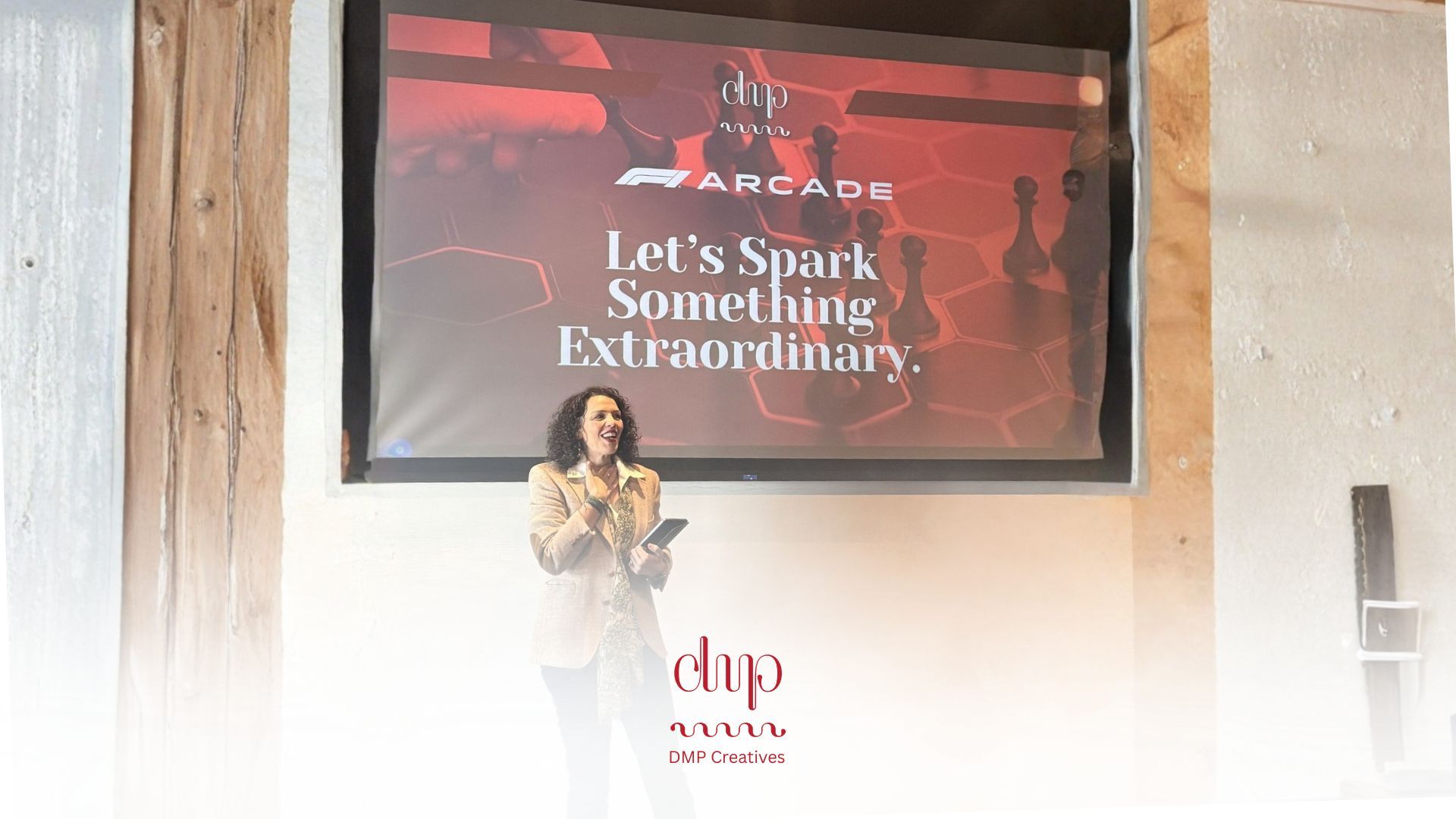
I worked with F1 Arcade on a sales kickoff that needed exactly this. Real alignment and momentum across a team that was sharp, high-performing, and needed the room to meet them at that level. The facilitation work started weeks before anyone arrived and shaped the entire program arc. Their words afterward: "She customized her SPARK framework specifically to what our sales team needed and kept a large group engaged, motivated, and focused across multiple full days."
That's what the investment buys.
The Question Worth Asking Before You Book the Venue
What does your team need to believe, know, and be ready to do when they land back home?
If you can answer that specifically, not generally, you've got the foundation for an SKO that actually works. If the answer is something like "we want them excited and aligned," there's more design work to do before the agenda gets built.
I'm available for SKO facilitation in the spring and fall conference seasons. If you're in planning mode right now, this is the conversation to have first.
Let's talk about your SKO →