
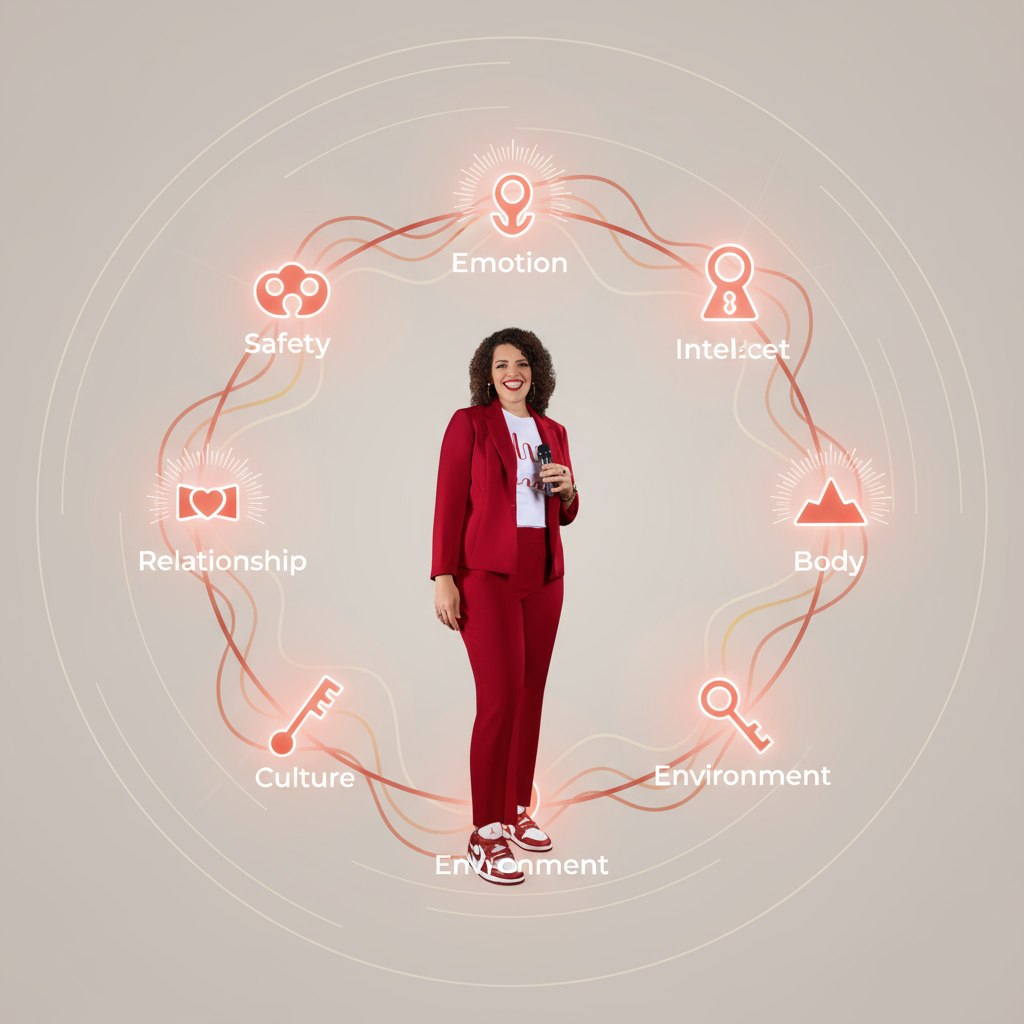
Explore seven access points that help facilitators and emcees spark transformation — from emotional safety to intellectual connection.
Every great event has a moment — that spark — when something shifts. The energy changes. People lean in. That’s transformation in action.
According to recent research on Transformative Experience Facilitation (TEF), facilitators and emcees can intentionally create these moments through seven “access points” — gateways that move participants from passive observers to active, reflective learners.
Let’s unpack what those access points look like in real event life, and how you can weave them into your next experience.
1. Safety — The Ground Beneath Transformation
Transformation can’t happen without trust. A skilled facilitator creates psychological and emotional safety first.
In events, that means establishing clear expectations, welcoming vulnerability, and modeling openness. Whether it’s a pre-session icebreaker or the tone an emcee sets on stage, safety says: You belong here. You’re seen. You’re safe to show up.
Example: When I emcee multi-day conferences, I start Day 1 by grounding the room — naming the shared purpose, normalizing imperfection, and reminding everyone we’re all here to learn together. That sense of safety lets participants relax into growth.
2. Emotion — The Spark That Ignites Meaning
Emotion is the heartbeat of memory. People don’t remember data points; they remember how something felt.
Facilitators tap into emotion through stories, tone, and sensory design — creating resonance. Think laughter, tears, goosebumps, or that quiet hum of collective reflection.
Example: A panel moderator who shares a personal story of failure before asking tough questions doesn’t just get better answers — they invite empathy and connection.
3. Intellect — The Doorway to Discovery
Once people feel safe and emotionally present, they’re ready to think differently. Intellect invites curiosity, challenge, and reframing.
A strong facilitator designs activities that engage critical thinking without intimidating the room.
Example: Asking, “What would happen if we did the opposite?” can unlock insights faster than a slide full of statistics.
4. Body — The Vessel for Presence
Our bodies hold information our minds often miss. Facilitators who engage physical movement, posture, or breath create embodied learning that sticks.
Example: During a leadership retreat, I invited participants to stand, stretch, and take one intentional breath before setting new goals. That moment of embodiment anchored the intention — and the learning lasted long after the session ended.
5. Relationship — The Mirror of Transformation
We grow in connection with others. Relationship-based facilitation centers dialogue, shared reflection, and empathy.
Example: Paired storytelling or small-group conversations can deepen understanding far more than a single speaker. When we see ourselves reflected in another’s story, transformation becomes tangible.
6. Culture — The Context That Shapes Meaning
Every room carries cultural layers — language, values, norms, humor. Great facilitators notice them and invite inclusion intentionally.
Example: An emcee who pronounces every speaker’s name correctly, acknowledges cultural holidays, or uses music from multiple traditions signals belonging at a deep level.
7. Environment — The Stage That Holds It All
The environment — physical and emotional — can either enhance or inhibit transformation.
Lighting, layout, and sound matter. But so does energy. The facilitator’s presence, pace, and tone create an invisible container that allows everything else to unfold.
Example: At a recent event, we restructured a ballroom in the round so no one sat more than three rows from the center. The energy shifted instantly — people were more alert, connected, and ready to engage.
Bringing It All Together
Transformation doesn’t happen by accident. It’s designed — moment by moment — through intentional facilitation across all seven access points:
Safety. Emotion. Intellect. Body. Relationship. Culture. Environment.
When these elements work in harmony, an event becomes more than an agenda. It becomes a journey — one that people remember not just for what they learned, but for how it changed them.
A Note to Event Leaders
If you’re designing an event, consider how each of these access points shows up in your agenda. Where do people feel emotionally safe? When are they moved to think or move differently? How are relationships, culture, and space shaping their experience?
Transformation isn’t about doing more. It’s about designing with intention.