PCMA BES in PR: Main stage co-emcee, fireside chat with Holly Ransom, Tourism Calgary focus group, and a Sunday workshop that stopped people in their tracks.
Listen. I don't just “show up” to conferences.
I know that sounds like something someone would put on a LinkedIn banner and call it a day. But I mean it literally. Every room I walk into, whether I'm behind a mic on a main stage, running a workshop, or sitting in the audience taking notes, I'm thinking about what this group of people needs in order to leave this space better than they arrived.
PCMA's Business Events Summit in Puerto Rico this year was a lot of things. Three different roles. A moment on Sunday morning I'll be talking about for a long time. And one of those experiences that reminds you exactly why you do this work.
Co-Emcee on the main stage
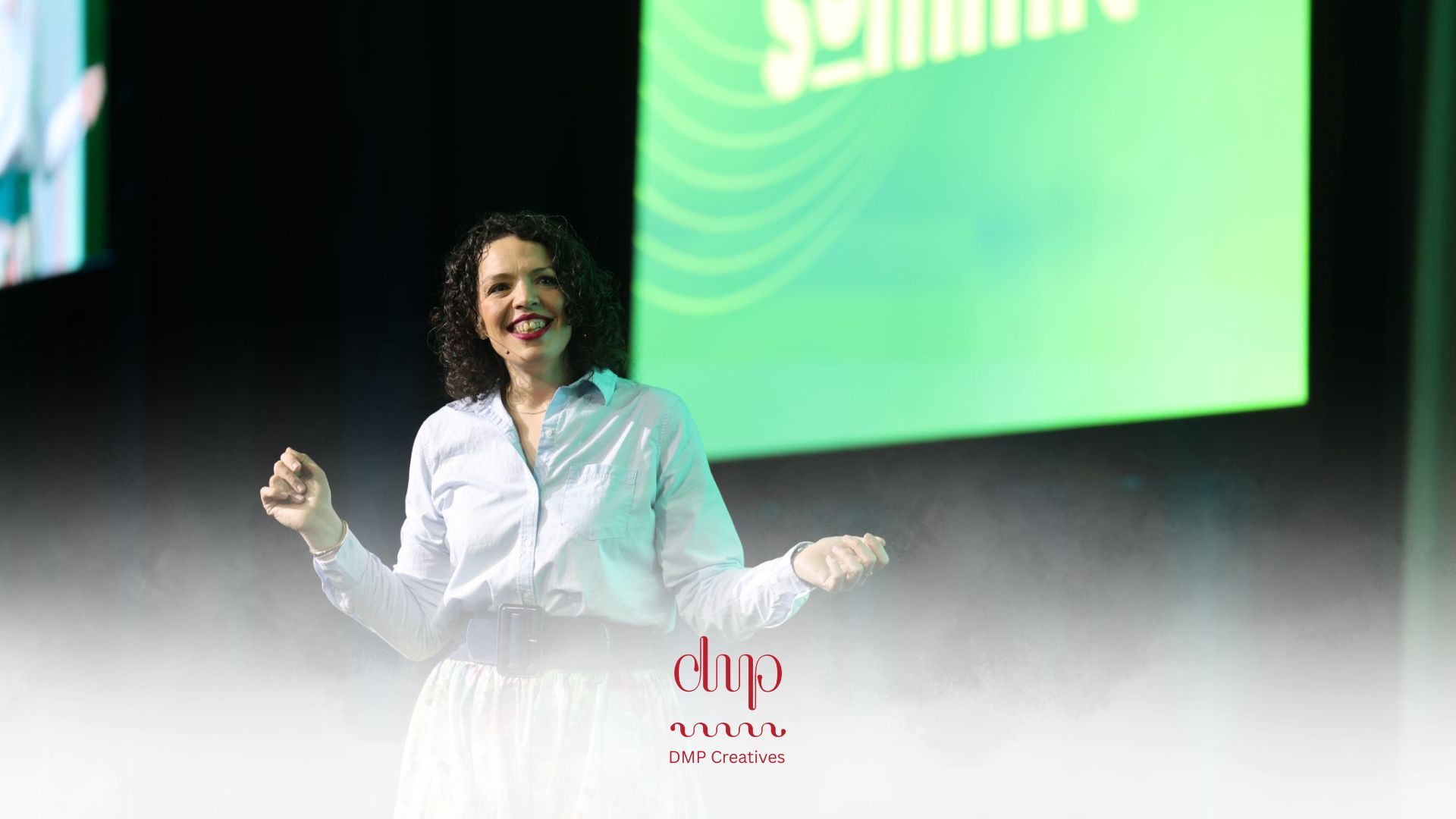
I was the Co-Emcee for BES this year, which meant I was holding energy on the main stage across the whole show alongside my Co-Emcee Avinash Chandarana. We designed each day as it came to manage energy, share content and take aways, and ensure that the room was held up and filled with inspiration and action.
This is the part of emceeing that doesn't always get talked about. Anyone can read an introduction off a card. What takes real skill is staying tuned into what the room needs in each moment. After a heavy session, do people need to breathe or do they need to move? Is the energy building or flagging? How do you hold the thread of the whole day while also being fully present in each individual moment?
That's the job. And I love it. L-O-V-E it!
But the highlight of my main stage role, the moment I will absolutely be telling this story for years, was getting to step into the lead emcee seat when my colleague Holly Ransom took the stage as a keynote speaker.
The Holly Ransom moment
If you don't know Holly, she's one of the most respected voices in the events industry globally. She's also the Emcee for PCMA Convening Leaders. So when Holly crossed over from the emcee role to the keynote speaker role at BES, I got to cross over with her in reverse and hold the room.
And then I got to interview her in the fireside chat.
I want to be clear about what that meant to me. This is someone I deeply respect, a peer at the highest level of this work, and I got to be in the chair across from her, asking the questions, guiding the conversation, holding that moment for the audience.
That's a full circle kind of experience. That's the kind of thing that makes you feel the weight of how far you've come and how much this community trusts you. I was so honored and so ready and so in my element all at the same time. Thank you Holly for all of your support and for the on site cheering squad.
The Sunday workshop: Design Event Content Like a Strategist
Okay. Here's the one I really need to sit with.
Sunday Pre-conference. The slot before the main summit program kicks off. It's a time slot that can go either way. People are arriving. They're still calibrating. Still figuring out what this week is going to be for them.
I ran "Design Event Content Like a Strategist: How to Architect Agendas That Deliver."
This workshop is close to my heart because it gets at the thing I believe most deeply: event design is a strategic act, not an administrative one. The way you sequence content, manage energy, and architect the flow of a day is the difference between an event that produces real outcomes and one that just produces attendance records. You can have the best speakers in the world and still end up with a flat room if the design isn't there.
I came in with that conviction. I built the whole session around it. And the room showed up for it.
Two attendees came up to me after and said it was one of the best workshop and education experiences they had taken in 15 years of professional development.
Fifteen years.
I don't take that lightly. That's not just a compliment about a nice session. That's confirmation that something in that room landed differently. That people left with something they're actually going to use. Something that changes how they do their work. That is always the goal. That is the whole point of every single thing I design.
Hearing it said out loud, by people who've been in a lot of rooms over a long career, meant everything.
What BES confirmed
BES is a well-designed event. You can feel it. PCMA brings real intention to the program architecture, the pacing, the session formats, the way content builds across the days. When the container is designed well, every role inside it gets easier because the event itself is already doing some of the work.
Here's what it confirmed for me: when a conference is intentionally designed, the people inside it rise to meet it. The energy shifts. The conversations go deeper. The willingness to really participate in a workshop or a focus group changes. Design isn't just what happens on stage. It's what gets made possible in every room, every hallway conversation, every session.
That's what I got to be part of in Puerto Rico. Three different roles. One through-line. All of it rooted in the same belief I've had since the beginning of this work.
What this is all about
I've been doing this long enough to know the difference between showing up and designing something. BES 2026 was the latter.
Every engagement, from the main stage to the focus group to the Sunday workshop, came from the same place: the people in the room deserve more than content delivery. They deserve an experience that was built for them, with intention, by someone who takes that responsibility seriously.
If you're planning a fall conference, leadership retreat, annual event, or summit and you want a facilitator and emcee who thinks about your event the way a strategist does, that's exactly what I do.
Let's talk about what your room needs.