
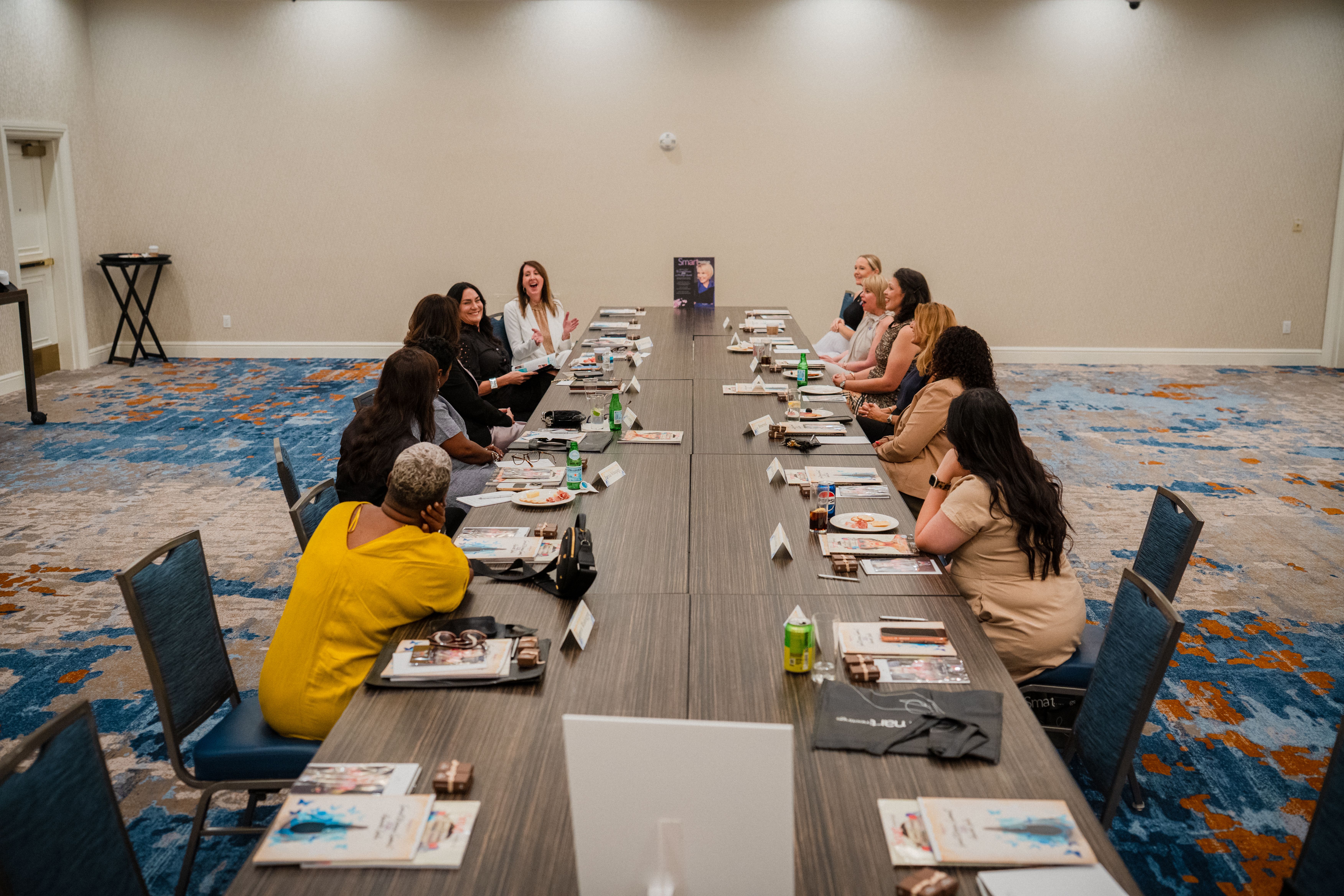
The best conversation at your event probably won't be on the agenda. Devon Montgomery Pasha on why white space is a design decision, not dead air.
You can pack an agenda with the best speakers, the most relevant content, and the most carefully curated sessions. And still miss the most important moment of the day.
Not because of what you included. Because of what you did not leave room for.
Where does the conversation go?
Every time I look at a packed event agenda, I ask the same question. Where does the conversation go?
The real conversation. The one that starts at a coffee station between sessions because two people from different departments finally have a moment to compare notes. The one that runs five minutes over because someone realized they have been working on the same problem from opposite ends. The one that becomes a working relationship, a new idea, a shift in how someone thinks about their work.
Those conversations are often the most valuable thing that happens at an event. And most event agendas are designed to eliminate them.
Why planners pack the schedule anyway
I get why it happens. A packed agenda feels productive. Every minute accounted for signals that the investment was worth it. White space feels like waste. It looks like dead air on a schedule that someone has to justify to leadership.
But here is what I know from being in rooms where the agenda runs from 8am to 9pm with 15 minutes for each transition: people can only hold so much. When the schedule never breathes, the content stops landing. People stop connecting the ideas. They move through the agenda because they are asked to, not because they are still present.
White space is not empty time
White space is processing time. It is the moment where someone walks up to the facilitator and says that last session changed how I think about something. It is the hallway conversation that becomes a partnership. It is the thing that could not have been scheduled but needed the schedule to leave room for it.
I build white space into every event design I work on. Sometimes 15 minutes. Sometimes a full open session framed as optional connection time. The reaction from planning teams is almost always the same at first: that is a lot of unscheduled time. And the response from attendees after is almost always the same too: that conversation I had at the break was worth the whole day.
The design question you need to ask before you lock the agenda
Before you finalize your agenda, look at where it breathes. Not the bathroom breaks. Not the transitions. Actual space for people to process, connect, and follow a thread that matters to them.
If the honest answer is that the agenda never really stops, you have a design problem. And the fix is not complicated. It just requires being willing to defend the empty time in a planning meeting.
That is a harder conversation than it sounds. But it is the one that makes the difference between an event people leave exhausted and one they leave energized.
The free 10 Blind Spots worksheet walks through the design questions your agenda should answer before it locks. Download it and work through it before anything gets finalized. Or if several of these are landing close to home, book a Blind Spot Assessment and let's look at your event design together.