SPARK isn't just a name. It's a five-stage framework for designing sessions that produce real outcomes. Here's what each stage does and why the order matters.
Why I built a methodology instead of just running sessions
After twenty years of designing and facilitating events, leadership retreats, annual conferences, SKOs, association gatherings, university programs, I noticed a pattern.
The sessions that produced the most weren't the ones with the best content. They were the ones where the energy moved through a specific arc. Where the room went through something together, not just received something together.
That pattern became SPARK. And it's what I use to design every session I hold, whether it's a two-hour leadership workshop or a two-day annual conference.
It's not a rigid script. It's a design framework. Here's what each stage actually does.
S — Storytelling
Every room carries a story into the space. Your organization's history. The moment you're in right now. What brought these specific people together on this specific day.
The Storytelling stage does two things: it surfaces that story, and it uses it to create the foundation for everything that follows.
When people feel like the session knows who they are not just the agenda but their actual context, their year, their stakes the room opens up faster. Trust builds earlier. The rest of the work can go deeper because the ground was prepared.
Storytelling doesn't mean everyone shares in a circle. It means the session is designed with the room's real story at the center.
P — Presence
A room of distracted, half-present people produces distracted, half-present outcomes.
The Presence stage is about creating the conditions for people to actually be there not just physically but mentally and emotionally. That means acknowledging what they're carrying into the room. It means making explicit what this session requires of them. It means removing the barriers to full engagement before the work starts.
This is often where the real work happens, quietly. Presence is what makes the rest of SPARK possible.
A — Action / Activation
This is where the room moves from receiving to doing.
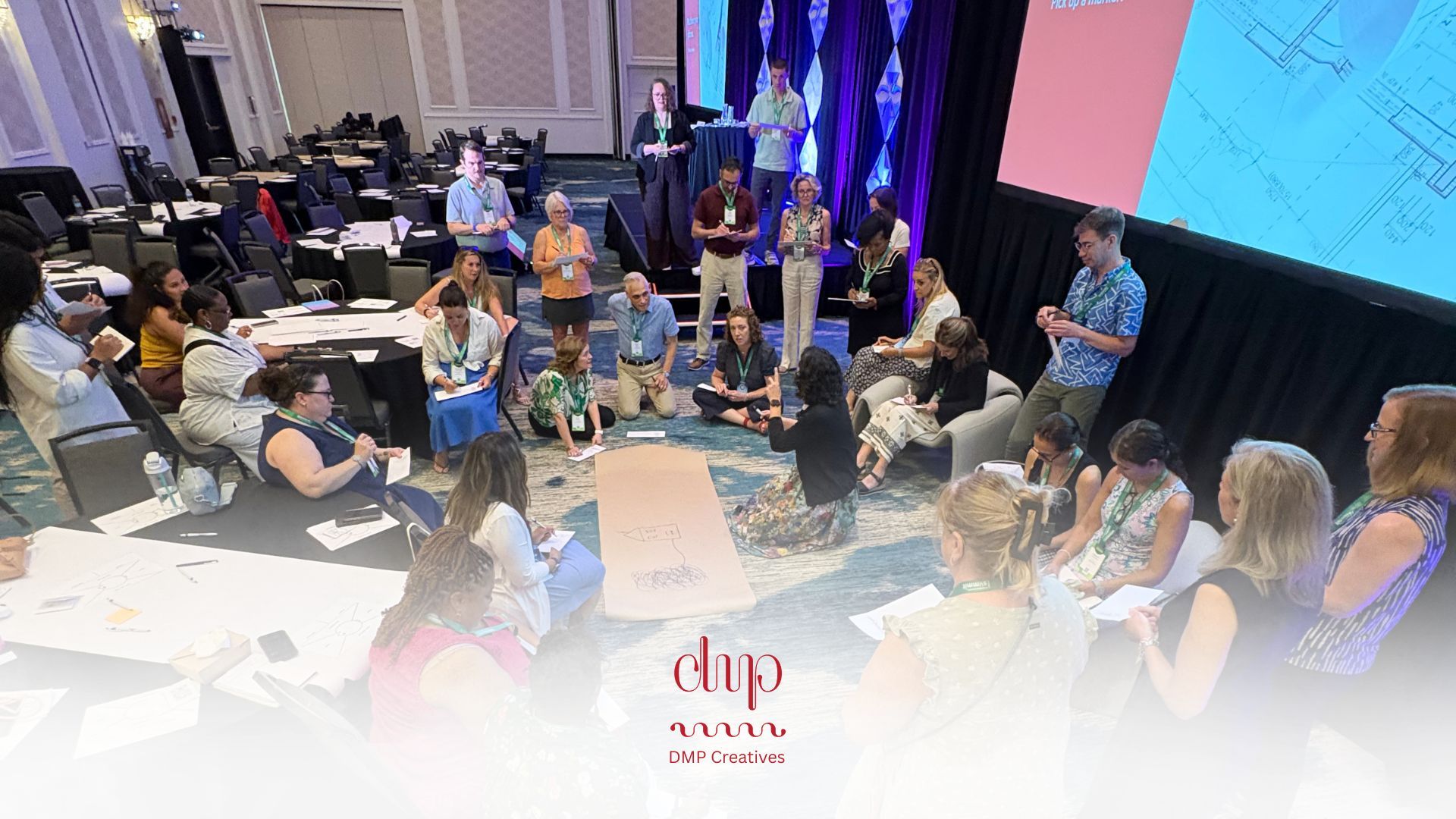
In most events, the arc runs from presentation to Q&A and Q&A is often the first moment participants get to actually engage. SPARK flips this: Activation happens earlier, more deliberately, and in a form that connects to the actual purpose of the session.
Activation might look like structured small-group dialogue. A question that requires a real answer, not a rhetorical one. A moment where participants name what they're bringing to the topic. The specific form depends on the session but the principle is consistent: get the room active before it gets passive.
R — Resonance
Information that lands creates Resonance. Information that passes through the room without landing creates attendance records.
The Resonance stage is about making sure what matters actually connects. That means pacing giving the room time to process rather than rushing to the next thing. It means choosing which moments to amplify and which to move past. It means designing the session so the most important content gets the most space to land.
Resonance is where the stakes of the session become real for the people in the room not just in theory but in their actual experience of the day.
K — Kinetics
Every session needs to end with movement. Not physical movement though that can be part of it but directional movement. Clarity on what changed, what was decided, and what happens next.
Kinetics is the close that produces momentum rather than just conclusion. It's the difference between leaving with a sense that the day mattered and leaving with specific next steps owned by specific people.
Without Kinetics, even a great session produces a good memory. With it, the work that happened in the room continues in the world.
Why the stages work together
SPARK isn't five separate things. It's one arc.
Storytelling builds the foundation. Presence creates the conditions. Activation starts the work. Resonance makes it land. Kinetics moves it forward.
When you skip stages,when you jump straight to content without building Presence, or when you close without building in Kinetics, you get a session that was technically fine but didn't quite produce what it needed to.
The full arc is what creates the full outcome.